
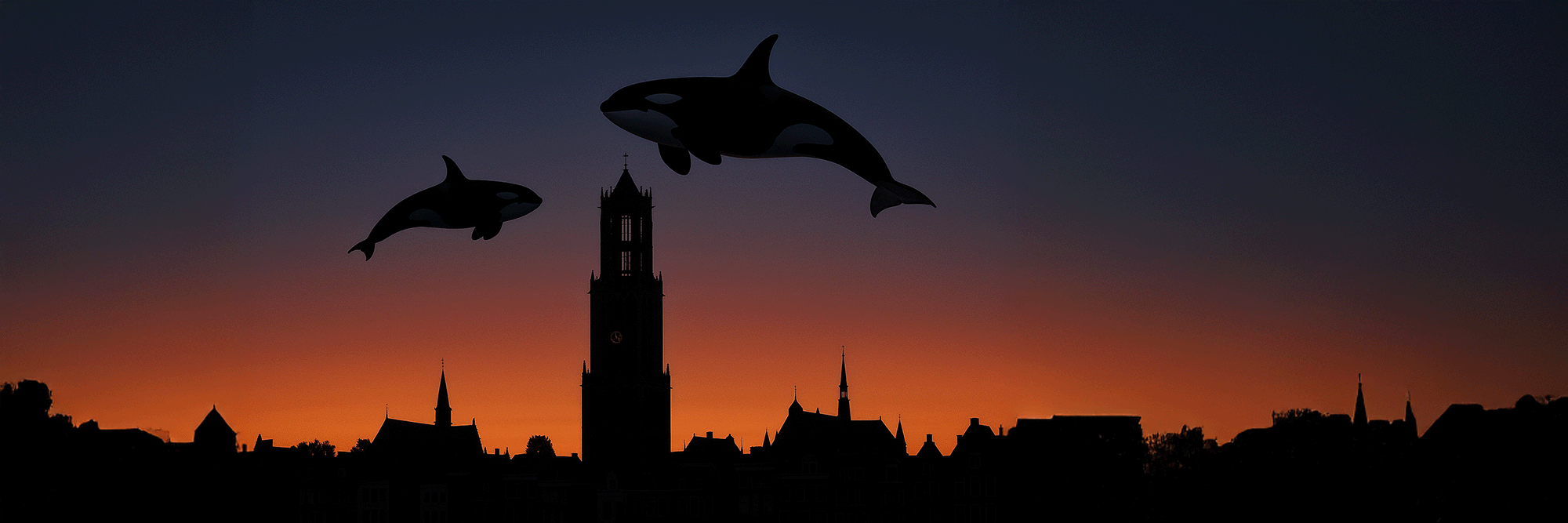
The Conference is being hosted by the Faculty of Humanities, and will take place in the Utrecht city centre, in and around the Janskerkhof, which is about a 10–15 minute walk from the Central Station. Most panels and workshops will take place in Janskerkhof 2–3 (JK2-3), though some will be in another building, Janskerkhof 15a (JK15a), on the other side of the square (watch out for bikes!). The keynotes and plenary sessions will be held in the lecture hall in Drift 13* (D13), room 0.04. Overflow from the plenary sessions will be in JK15a 0.04. Lunch will be served in the courtyard of the University Library, located at Drift 27. This is also the location for the drinks reception on Thursday.
* “Drift” is the name of the street; equivalent to “drove” in English, i.e. a route for droving livestock to market.
Tuesday 14 April
When
10.00–12.00
12.00–13.00
13.00–15.00
15.00–16.00
16.00–16.30
16.30–18.00
Walk-in / Registration
Official Opening
Keynote 1: Greg Garrard
Wednesday 15 April
When
8.30
9.15–10.45
10.45–11.15
11.15–13.00
13.00–14.00
14.00–15.30
15.30–16.00
16.00–17.45
18.00–19.00
What
Walk-in / Registration
Keynote 2: Kate Rigby
Coffee
Lunch
Coffee
Ecozon@ meeting
Where
JK2–3
D13, 0.04 / JK15a
JK2–3
JK2–3
D27
JK2–3
JK2–3
JK2–3
JK2–3, 0.19
Thursday 16 April
When
8.30
9.15–11.00
11.00–11.30
11.30–13.00
13.00–14.00
14.00–17.00
17.00–18.30
19.30–21.00
What
Walk-in / Registration
Coffee
Lunch
Reception
Film screening, Savanna and the Mountain (dir. Paulo Carneiro, 2024, 77’)
Friday 17 April
When
8.30
9.15–11.00
11.00–11.30
11.30–13.00
13.00–14.00
14.00–16.30
16.30
17.00
What
Walk-in / Registration
Coffee
Keynote 3: Eva Meijer
Lunch
EASLCE AGM
Concluding Remarks / End
Post-conference Drinks
Keynote Speakers
Prof. Greg Garrard (University of British Columbia, Canada)
“Orca Uprising or Co-Extinction? Killer Whale Cultures in Flux”
Moderator: Susanne Ferwerda
Tuesday 14 April, 16.30–18.00
Drift 13, room 0.04
In the beginning, maritime Euro-Americans thought killer whales were indiscriminately bloodthirsty monsters. Then, in the 1960s, whales captured for marine theme parks turned out to be gentle giants who could be trained to perform breathtaking displays. The Shamu myth promulgated by SeaWorld was boosted by Free Willy (1993), though the latter also unexpectedly inspired a movement to ‘free’ Keiko, the trained killer whale that starred in the movie. Still, surely killer whales could come to be seen as companion species? Perhaps not. First, the activist documentary Blackfish (2013) scuppered the Shamu myth, and then, in 2020, members of the Gibraltar population were filmed attacking yachts. Elsewhere, scientists, wildlife filmmakers and whale-watchers observed behaviour that seemed ethnocentric, xenophobic, even sadistic. Thus killer whale cultures are in flux in two senses: first, Euro-American popular culture is no longer sure what killer whales want, or what language is appropriate to describe their behaviour. And second, the cultures of the creatures themselves may be changing in response to the various technologies and warm bodies we humans are introducing to the oceans where they have dominion.
Prof. Kate Rigby (MESH, University of Cologne, Germany)
“Ask the Beasts”
Moderator: Kári Driscoll
Wednesday 15 April, 9.15–10.45
Drift 13, room 0.04
This lecture begins by probing the desires that animate the current eagerness shared by many to spot signs of non-human, and especially animal, resistance to human domination, considering also the ecocultural assumptions and ecopolitical implications of such imaginaries of an incipient other-than-human uprising. It then brings an intercultural and decolonial perspective to bear on the question of multispecies (in)justice, exploring diverse modes of human comportment towards other critters in the horizon of anthropogenic mass extinction: confronting conflict and recognising resistance, but also seeking solidarity and practicing compassion. Accepting alterity, the resistance of otherkind to being rendered transparent to human consciousness, if we were, today, to “ask the beasts” (Job 12.7), variously situated as we are in relation to differing eco-cultural and geo-historical multispecies collectives, what might they have to teach us (remembering, of course, the animals that we ourselves are)?
Dr. Eva Meijer (University of Amsterdam, Netherlands)
“Multispecies Storytelling as Resistance: Writing with, for and about Nonhuman Animals”
Moderator: Mia You
Friday 17 April, 11:30–13:00
Drift 13, room 0.04
In recent years, scholars in the critical humanities and life sciences have argued that humans are not the only storytellers. Many other animals have their own languages and cultures, forms of art, and other ways of creating meaning. Still, most human writers, artists and scientists who tell more-than-human stories do not include the others they speak about in creating knowledge and meaning. This keeps intact human supremacist thinking and being. It also reaffirms the exclusion of other animals from the domain of multispecies meaning-making, which obstructs possibilities for living otherwise. In my talk I investigate how we can learn to think and write better with nonhuman animals. This includes recognizing that human storytelling is always more-than-human, learning about how others create meaning and foregrounding their voices in processes of knowledge creation.